Carry better · Live with intention · Build what matters

Everything has a place.

Gear, aesthetics, creator knowledge, and practical business thinking, brought together by one idea: useful things should help people move forward.

Everyday carry flat lay in warm editorial light: folding knife, brass pen, and leather-strap watch on a notebook
Casita Herrera living room in golden hour light streaming through the blinds
Built from
real life
for real life

Useful things.
Yours to use.

Eight free guides and templates for what you carry, how you live, what you create, and how you lead. No checkout. No email required.

Open any resource to use the steps and copy the template.

Carry · Free resourceThe pocket auditMake room for what actually earns its place.
  1. Empty your everyday bag or pockets and group items by the job they do.
  2. Mark what you used in the last seven days, what you carry for a specific contingency, and what simply stayed there.
  3. Remove one duplicate or unused item for a week. Keep necessary safety and accessibility items.
  4. At the end of the week, note what you missed before adding anything back.

Item: ___ | Job: ___ | Last used: ___ | Keep, replace, or leave home: ___

Open the full guide & worksheet →

Carry · Free resourceAn honest gear reviewA simple way to separate observation from enthusiasm.
  1. Name the task and the conditions in which you used the item.
  2. Describe one thing that worked and one tradeoff you noticed.
  3. Separate what you tested from what a manufacturer claims.
  4. Say who might find it useful, and disclose any gifted item, affiliate link, or paid relationship.

I used ___ for ___. It helped with ___. The tradeoff was ___. I have not tested ___. My relationship with the brand is ___.

Open the full guide & worksheet →

Home · Free resourceThe 15-minute room resetStart with what you already own.
  1. Minutes 0–3: choose one corner and name how you want to use it.
  2. Minutes 3–7: clear that surface and return unrelated objects to their places.
  3. Minutes 7–11: reposition an existing lamp, chair, or useful object. Keep walkways clear.
  4. Minutes 11–15: live in the arrangement briefly, then keep one change that makes the space easier to use.

This corner is for ___. The friction is ___. One change I can make without buying anything is ___.

Open the full guide & worksheet →

Home · Free resourceLight, texture, flowThree prompts for a more intentional space.
  1. Light: where do you need to read, work, rest, or move comfortably?
  2. Texture: which existing materials make the room feel inviting to you?
  3. Flow: where do you repeatedly move things out of the way?
  4. Try one change at a time and compare how the room feels in daylight and at night.

Keep: ___ | Move: ___ | Remove: ___ | Try for three days: ___

Open the full guide & worksheet →

Create · Free resourceFive prompts to get unstuckTurn something you know into something someone can use.
  1. Show a tool you actually use and explain the task it solves.
  2. Teach one small step you wish someone had explained earlier.
  3. Describe a mistake and the adjustment you made.
  4. Compare two approaches and the situation where each fits.
  5. Answer a real question in three plain sentences.

For someone who is trying to ___: here is one way to ___. First ___. Then ___. Try it by ___.

Open the full guide & worksheet →

Create · Free resourceThe one-minute camera warm-upA private practice exercise. No publishing required.
  1. Pick one person you want to help and one question they might ask.
  2. Write three bullets: the problem, one useful step, and an example.
  3. Record a short take as if you were explaining it to that person.
  4. Listen once for clarity. Re-record only the sentence you want to simplify; perfection is not the goal.

If you are struggling with ___, try ___. For example, ___. Your next step is ___.

Open the full guide & worksheet →

Build · Free resourceMap one workflowA blank framework for finding the next useful improvement.
  1. Choose one repeated task and define its starting signal and finish.
  2. Write the steps in their actual order, including who owns each handoff.
  3. Mark one point where work waits, repeats, or becomes unclear.
  4. Agree on one small change, one owner, and a review date. Use generic examples rather than personal or patient information.

Trigger: ___ → Step / owner: ___ → Handoff: ___ → Done means: ___. Friction: ___. Experiment: ___. Owner: ___. Review date: ___.

Open the full guide & worksheet →

Build · Free resourceA better weekly check-inFive questions you can bring to your next conversation.
  1. What moved forward this week?
  2. What feels blocked or unclear?
  3. What is the most important next step?
  4. What support or decision do you need from me?
  5. Who owns the next action, and when will we check back?

Progress: ___ | Blocker: ___ | Next action: ___ | Owner: ___ | Support needed: ___ | Follow-up: ___

Open the full guide & worksheet →

New to AI agents? Start guide: your first AI agent → The quick on-ramp from Every Dan Everywhere. Free, no email required.

Every Dan Collective is the house. Each pursuit is a room, and every room is built to be useful.

It brings together the objects carried every day, the atmosphere of home, creator resources shaped by doing the work, and business lessons grounded in leadership and service.

Find your way in.

Start with what brought you here, then follow the thread. Each pillar has its own point of view; all of them belong to the same mission.

A titanium folding knife from Daniel's everyday carry collection
01 · Gear

Every Dan Carry

Everyday-carry gear with character, honest use, and a collector's eye. Knives, tools, pocket dumps, and the stories behind what earns a place.

Free carry checklist →
TV console styled wire-free at Casita Herrera
02 · Aesthetics

Casita Herrera

A home shaped through light, texture, technology, and flow. Blended, cultivated, curated.

Free room reset →
Illustrated business planning desk with project cards, calculator, ruler, and planner
04 · Lead

Business, Made Useful

Leadership, systems, ethics, and operating lessons translated into moves people can actually use.

Free workflow template
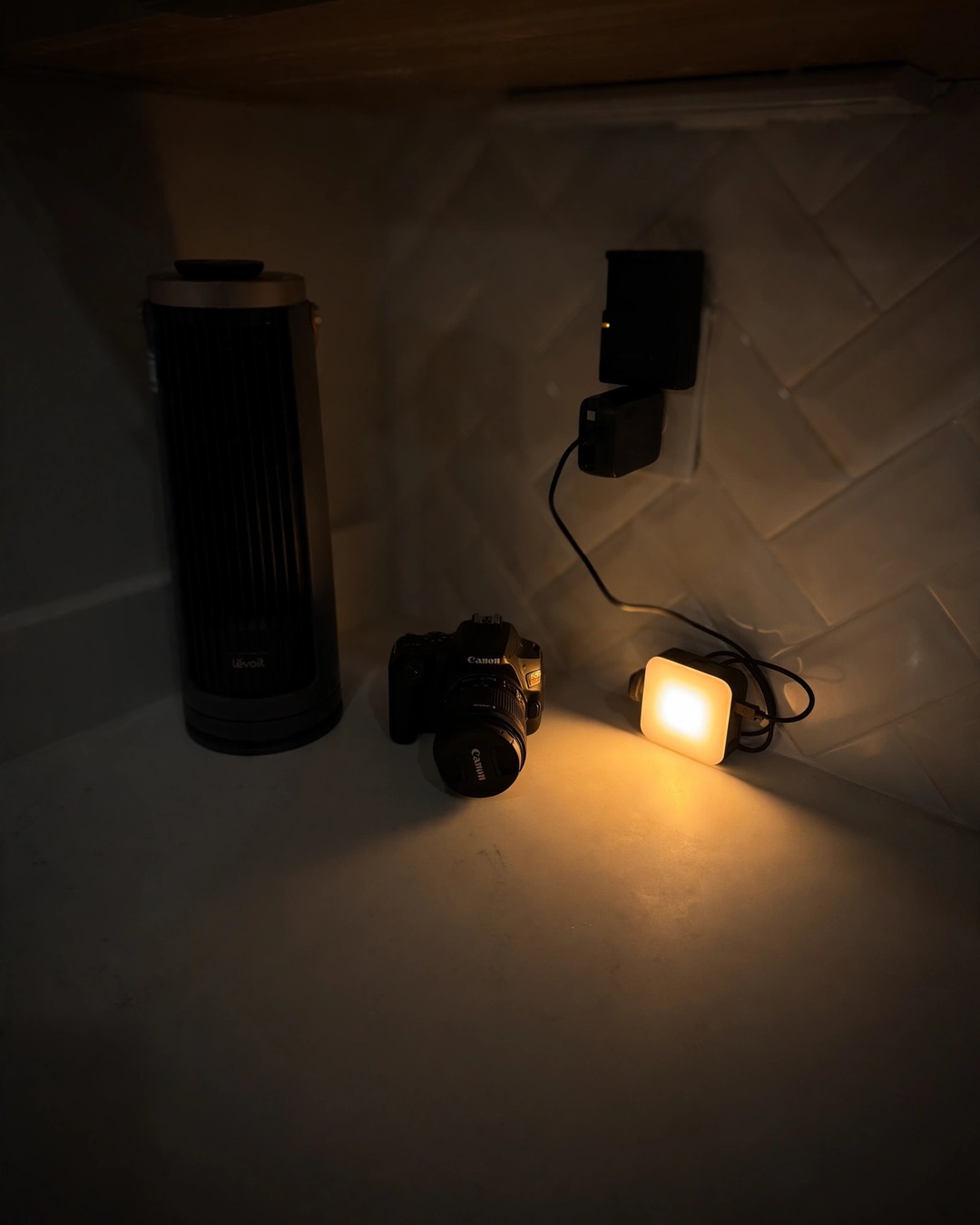
One of the biggest pieces came out.

Canon EOS Rebel SL3 on its charger beside a lit cube light in a dark kitchen, Levoit Windi fan at the left
A whole studio sat in this apartment, forgotten.
Tonight, first time in a long time, one of the biggest pieces came out.
She’s on the charger.

Experience is only valuable when it becomes useful to someone else.

Daniel Herrera brings together the perspective of a healthcare professional, Navy veteran, student of leadership, creator, and collector. Every Dan Collective is where those lives stop competing and start informing one another.

The point is not to show a stack of credentials. The point is to turn what has been learned, built, carried, and lived into something that helps.

ServiceNavy respiratory therapist, USNS Comfort
LeadershipMBA, MPA, Executive Leadership
Law & ethicsJuris Master, Certified Ethical Leader
OperationsLean Six Sigma Green Belt, PMP in progress
DesignMaster's-level graphic design coursework, Academy of Art University, San Francisco
A quick hello from Daniel.

Work stories.
Fresh starts.

Original humor and a little perspective on the work we do, the lives we build, and the strange moments along the way.

Read The Orientation →

Written edition available. Video edition in development.

The OrientationFirst-day confusion. A printer with boundaries.
Starting OverOne real step before another perfect notebook.
Leadership LanguageOffice phrases, translated into plain English.

What holds it together.

01

Use before hype.

Tools, ideas, and systems have to earn their place in real life.

02

Taste with a reason.

Aesthetics are not decoration. They shape how a space, an object, or a message feels.

03

Give the map away.

Lessons become more valuable when another person can use them to move.

Start with one room. Discover the whole house.

Follow the gear, explore the atmosphere, or use a playbook to make the next thing happen.

Copied